
Most of us turn to our doctor when something doesn't feel right. Whether it's an unexpected lab result, a new health concern, or a condition we've been managing for years, our primary care provider is often the first person we turn to for answers.
And for good reason. Doctors evaluate symptoms, review medical history, order diagnostic tests, establish diagnoses, and help determine the appropriate course of medical treatment.
But what happens after that appointment?
You may leave with a diagnosis, a prescription, or recommendations to make changes to your diet and lifestyle. Perhaps you've been told to reduce your sugar intake, improve your cholesterol, lose weight, or make healthier food choices.
The advice may make sense, but knowing exactly how to put it into practice can be another challenge entirely.
That's where a Registered Dietitian Nutritionist can become an important part of your healthcare team.
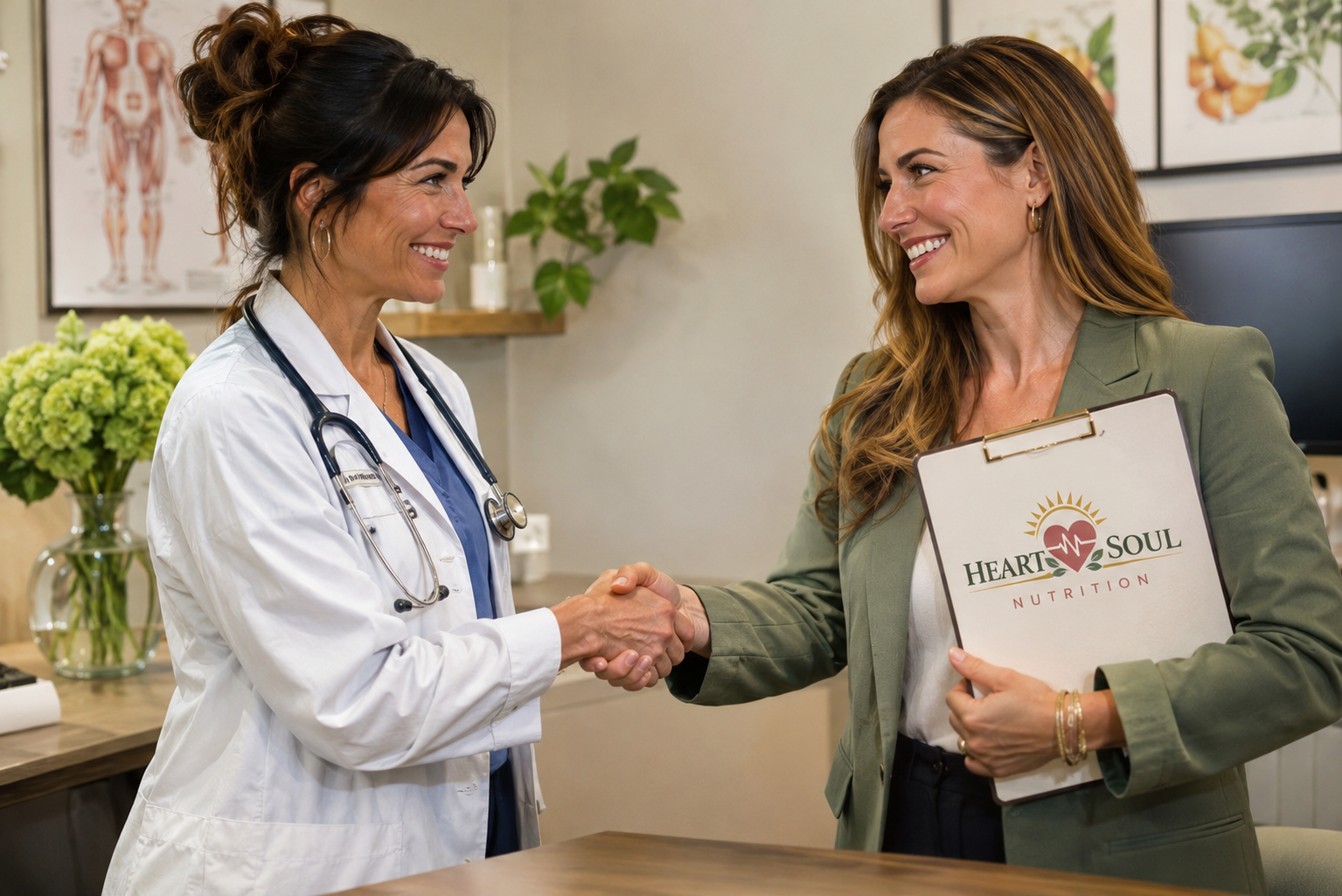
When physicians and dietitians work together, individuals can benefit from both medical expertise and personalized nutrition guidance. Your doctor helps evaluate and manage your medical needs, while your dietitian helps translate nutrition recommendations into practical strategies that fit your everyday life.
At Heart N Soul Nutrition, we believe that understanding the whole person is an important part of supporting long-term health and wellness.
Let's explore why these two healthcare professionals can make such a valuable team.
Doctors and Dietitians: Different Roles, One Shared Goal
It's not a matter of choosing one professional over the other. Both play important, complementary roles in your healthcare.
Your Primary Care Provider
Your doctor or primary care provider focuses on evaluating and managing your medical health. This may include:
- • Evaluating symptoms and medical concerns.
- • Reviewing medical history and laboratory results.
- • Diagnosing medical conditions.
- • Prescribing and managing medications.
- • Coordinating referrals and additional medical care.
- • Monitoring overall health and disease progression.
Your Registered Dietitian Nutritionist
A Registered Dietitian Nutritionist (RDN) focuses on the relationship between nutrition, lifestyle, and health. Depending on individual needs, nutrition counseling may include:
- • Evaluating dietary habits and nutritional needs.
- • Developing individualized nutrition strategies.
- • Helping translate medical recommendations into everyday food choices.
- • Supporting medical nutrition therapy when appropriate.
- • Identifying opportunities to improve nutritional balance.
- • Providing ongoing nutrition education, guidance, and accountability.
Your doctor evaluates and manages your medical needs. Your dietitian helps you understand how nutrition fits into your overall healthcare plan.
Together, they can provide a more coordinated approach to your health.
When Should You Consider Working with a Registered Dietitian?
You don't necessarily need to wait until a health concern becomes overwhelming before seeking nutrition guidance.
A Registered Dietitian can support individuals navigating a variety of nutrition-related concerns, including:
High Blood Pressure and Cholesterol
Nutrition counseling can help you understand how food choices, dietary patterns, sodium intake, fiber, and other nutritional factors relate to cardiovascular health.
Prediabetes and Diabetes
Personalized nutrition guidance can help individuals understand carbohydrate intake, meal planning, blood glucose management, and sustainable eating habits alongside their medical treatment.
Digestive Disorders and Gastrointestinal Concerns
Individuals experiencing IBS, inflammatory bowel disease, food intolerances, or ongoing digestive discomfort may benefit from individualized nutrition assessment and guidance.
Hormonal and Metabolic Health
Nutrition can be an important consideration for individuals navigating PCOS, metabolic concerns, and other health conditions involving hormonal or metabolic factors.
Autoimmune and Chronic Health Conditions
Nutrition needs can vary considerably depending on the individual and their medical circumstances. A Registered Dietitian can help evaluate dietary patterns and develop appropriate nutrition strategies in coordination with the broader healthcare team.
Weight Management and Nutritional Wellness
Whether someone is working toward weight management, improving energy, or establishing healthier eating patterns, individualized nutrition counseling can help create realistic and sustainable goals.
Navigating GLP-1 Medications
Individuals taking medications such as Ozempic or Wegovy may benefit from additional nutrition support.
Changes in appetite and food intake can make it more challenging to meet nutritional needs. A Registered Dietitian can help individuals consider protein intake, hydration, fiber, meal composition, and overall nutritional adequacy while following their prescribing provider's treatment plan.
Nutrition support can also be valuable when discussing strategies for maintaining healthy habits if medication changes or discontinuation are being considered with the prescribing clinician.
Why the Partnership Between Doctors and Dietitians Works
Your doctor looks at your health from a clinical perspective, considering your medical history, symptoms, medications, laboratory results, and individual risk factors.
Your Registered Dietitian takes a closer look at how nutrition and daily lifestyle habits fit into that picture.
What does your typical day of eating look like? What foods do you enjoy? Are there cultural, financial, or lifestyle considerations that influence your choices? What challenges make it difficult to follow previous recommendations?
These details matter.
Nutrition recommendations should be realistic and individualized. A plan that looks good on paper but doesn't work with someone's everyday life is unlikely to become a sustainable habit.
When appropriate, collaboration between healthcare providers can help individuals:
- • Develop healthier eating patterns.
- • Support blood glucose management and cardiovascular health.
- • Improve nutritional adequacy.
- • Address individual digestive and gastrointestinal nutrition concerns.
- • Establish sustainable weight management habits.
- • Better understand the relationship between food, lifestyle, and health.
- • Make informed decisions about nutrition alongside medical treatment.
The goal isn't to replace one healthcare professional with another. It's to bring different areas of expertise together to support the individual as a whole.
Your Healthcare Team May Be Closer Than You Think
Primary care appointments are often focused on immediate concerns, medical evaluations, and treatment decisions. There may not always be enough time to explore every detail of nutrition, meal planning, food preferences, and daily lifestyle habits.
That's one reason Registered Dietitian Nutritionists are valuable members of a broader healthcare team. Nutrition counseling gives you dedicated time to ask questions, understand your options, and build a plan that fits your real life — not just a list of recommendations you're expected to figure out on your own.
When your doctor and your dietitian are both part of your care, you benefit from a more complete picture of your health. Medical guidance and personalized nutrition support work hand in hand, each strengthening the other.
A Whole-Person Approach to Nutrition Care
At Heart N Soul Nutrition, I work with individuals who want to understand how nutrition fits into their overall health — not as a quick fix, but as a meaningful part of their long-term wellness.
That often means working alongside the care your doctor provides. Your medical history, lab results, diagnoses, and treatment plan all inform the nutrition guidance I offer. And when appropriate, I can help you communicate with your broader healthcare team so your nutrition plan supports — rather than conflicts with — your medical care.
Whether you're managing a chronic condition, adjusting to a new diagnosis, navigating changes in medication, or simply trying to build healthier habits, personalized nutrition counseling can help you feel more confident and supported along the way.
Ready to Build Your Nutrition Plan?
If you've been given nutrition recommendations by your doctor and you're not sure where to start, you don't have to figure it out alone.
Working with a Registered Dietitian can help you turn medical guidance into practical, sustainable habits that fit your life. If you'd like to explore personalized nutrition counseling at Heart N Soul Nutrition, I'd be glad to help you take the next step.
Turn Medical Guidance Into a Plan That Fits Your Life
Explore personalized nutrition consulting with Amanda Dawson, MS, RD, LDN, ILC — designed to support your medical care and your everyday wellness goals.
By Amanda Dawson, MS, RD, LDN, ILC
Heart N Soul Nutrition